Merri-bek City Council brings 150+ staff up to speed on AI
A metropolitan council chose to build AI fluency across its whole workforce before asking anyone to use the tools. Ten sessions later, staff who arrived reluctant were asking for more.
150+
people trained
10
sessions delivered
4.79
average trainer rating from participants
6
cohorts, executive to frontline
The opportunity
Merri-bek City Council serves more than 160,000 residents across Melbourne's inner northern suburbs, with a workforce of over a thousand full-time, part-time and casual employees spread across offices, depots and community sites.
It made an early call that a lot of organisations are still working up to. Rather than rolling out Microsoft Copilot and hoping people would find their way, the council invested in bringing its whole workforce up to speed with the technology behind it first. The goal was practical: give staff the confidence to use AI well in their day to day work, and give leaders what they needed to support their teams through the change.
Better People worked with the council to survey its teams first. Staff and leaders across the organisation shared where they were with AI, what they wanted to use it for, and what was holding them back. The picture that came back was an encouraging one to design for. Appetite was high right across the council, capability was still catching up, and leaders were clear that they wanted to be in a position to guide their people rather than simply approve the rollout.
Everything that followed was built around those answers.
The approach: fluency first, then the tool
First
What this technology actually is, how it arrives at an answer, where it is strong, and where it needs a human check. Interpretation bias, how to verify what comes back, and what belongs in a prompt when you work with residents' information.
Then
With that foundation in place, the training moved to the tool itself, taught through the GCSE prompting framework: Goal, Context, Source, Expectations. Practical, repeatable, and grounded in council work.
The order matters. Fluency is what lets someone judge an answer rather than simply accept it, so every Copilot skill taught afterwards has something solid to attach to.
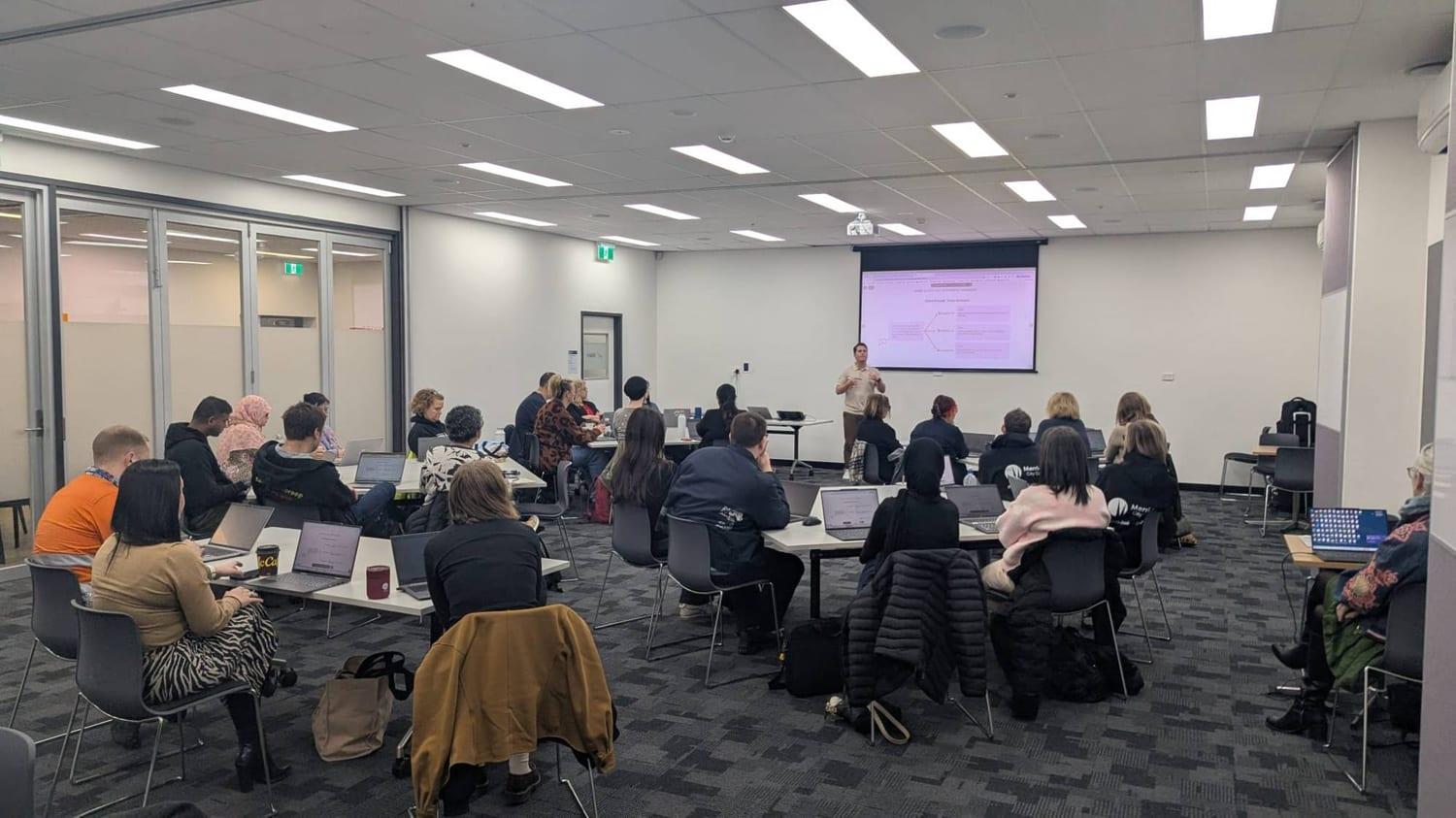
Hands-on from the first ten minutes
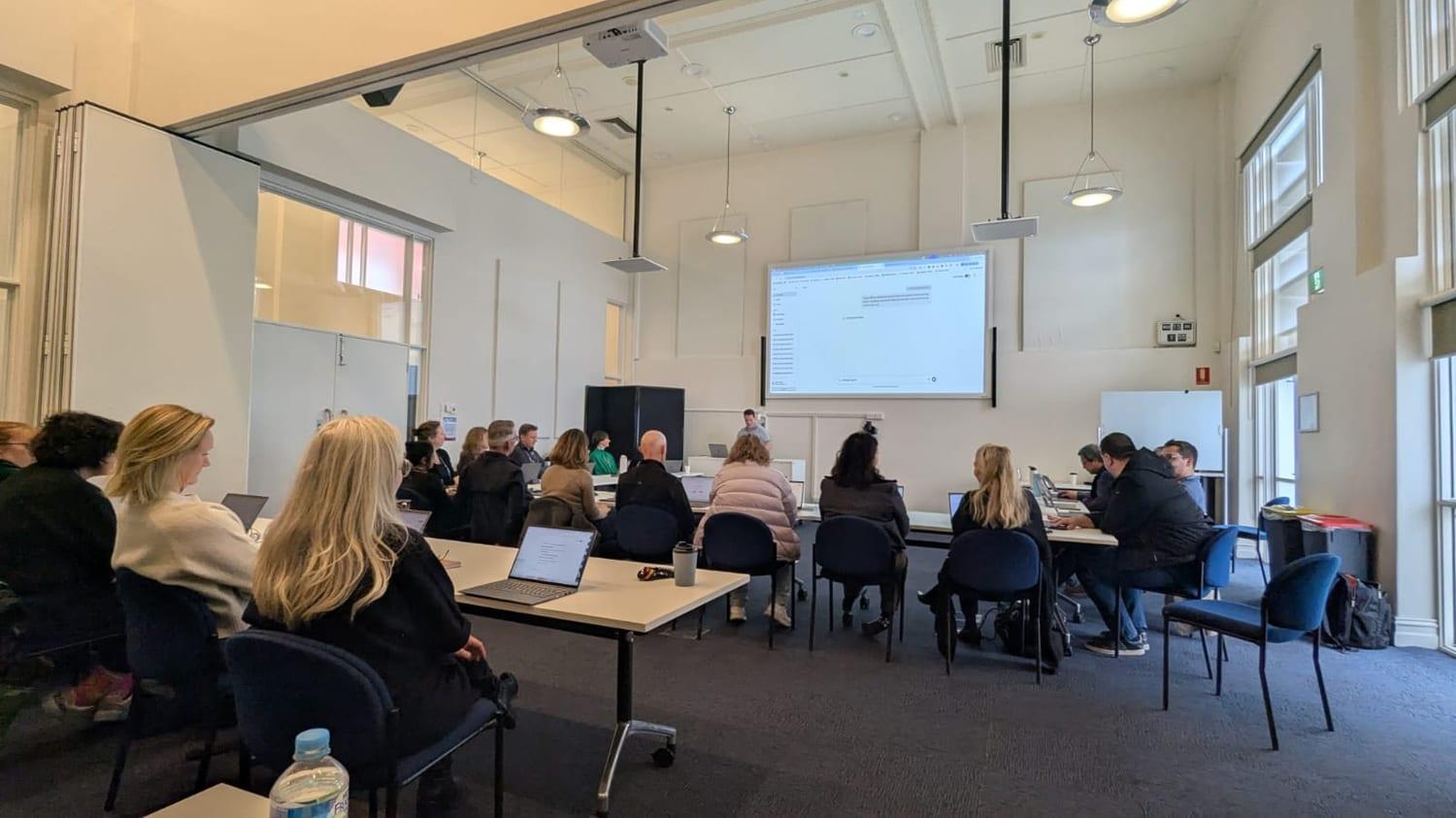
These are not slideshow sessions. Participants come with laptops and use them for most of the time they are in the room.
They answer questions live and see the room's responses come back on screen. They write their own prompts, run them, compare what different people got from the same starting point, and rework them. When a demonstration is on screen, they are doing it alongside the trainer rather than watching it happen.
I was a reluctant user and now I really want to use it.
Built on the council's own work
The demonstrations used real council material and fictionalised Merri-bek data, so what people practised in the room was what they would do at their desk the next morning.
- Rewriting the council's own Action Plan three ways for three audiences: an executive overview, a community newsletter piece, and a briefing extract quoting commitments exactly.
- Researching how other Victorian councils approached FOGO rollouts, under a rule that every claim needed a source link to make the cut, then opening those links live on screen to check them.
- Turning a colleague's spoken description of a process into a written procedure a new starter could follow on day one.
What was delivered
Ten sessions, delivered in role-based cohorts so the content matched what each group needed to do with it. Everything was taught on Microsoft Copilot, the tool the council had actually deployed, so nobody had to translate generic AI concepts into their own workplace.
- Directors and executive assistants
- Branch managers
- Unit leaders
- Team leaders and crew leaders
- All staff, in person
- All staff, online and recorded for the council's LMS
What participants said
This was really clear and informative. Really reduces my anxiety around using AI and can see so many benefits.
Session participant Brilliant training! It cleared all the questions I had. Thanks.
Session participant Best training I've done in a long time!
Session participant
What other councils can take from this
Ask your own people first
The council surveyed staff and leaders before any content was written, so the program answered what its own workforce said it needed.
Teach the technology before the tool
Fluency is what lets someone judge an answer instead of accepting it, and it is the difference between staff who can produce output and staff who can trust it.
Train every level, not just the early adopters
Directors, managers, team leaders and frontline staff all went through it, so nobody was left supporting a change they had not been trained on.
Planning AI training for your council?
We design and deliver AI and Copilot programs for councils across Australia, built around your workforce, your tools and your own survey data. Tell us where your team is starting from.